[MS DONT'T TOUCH] Vitamin E for the face: why use it ?
![[MS DONT'T TOUCH] Vitamin E for the face: why use it ?](https://www.etatpur.sg/media/mageplaza/blog/post/v/i/vitamine_e_blog.png)
Vitamin E for the face: why use it ?
What if your skin could benefit from an antioxidant boost?
Pollution, sun exposure, cigarette smoke, stress and certain lifestyle habits can contribute to the premature appearance of signs of ageing. Fortunately, there is an active ingredient naturally present in the body whose effectiveness is well established: vitamin E.
Used in cosmetics for many years, vitamin E is recognised for its antioxidant action. It helps the skin to cope with environmental aggressors responsible for oxidative stress and helps to preserve its radiance day after day.
Key takeaways from this article
- Vitamin E is a recognised antioxidant that helps the skin to combat oxidative stress.
- It helps to protect the skin against daily aggressors such as UV rays and pollution.
- Alpha-tocopherol is the main form of vitamin E found in the skin.
- Vitamin E is particularly beneficial for skin exposed to urban environments and pollution.
- Regular use can help to support the skin’s antioxidant defences and preserve its radiance.
- Etat Pur Pure Active Vitamin E 3.9% provides a targeted dose of vitamin E, selected based on scientific publications, to support skin exposed to environmental aggressors.
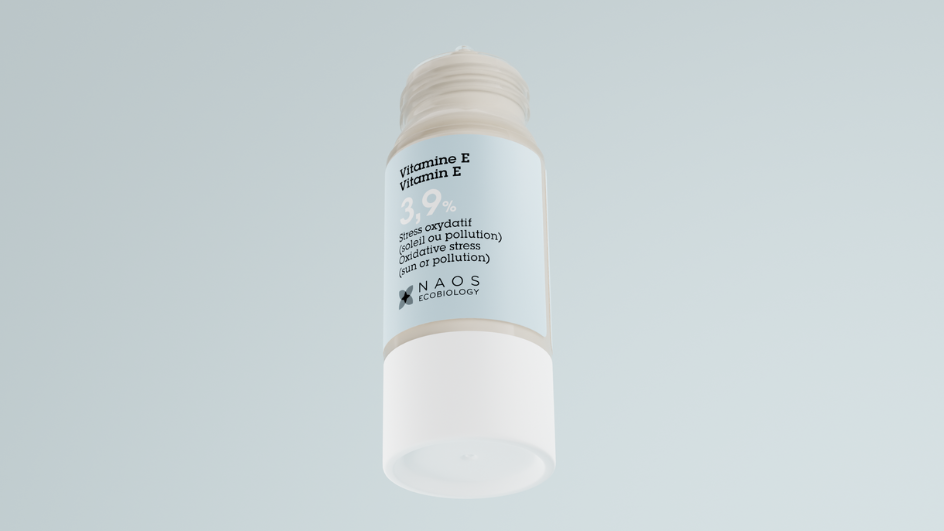
What is vitamin E?
Vitamin E is a fat-soluble vitamin naturally present in the body and in many foods.
However, this vitamin is not produced directly by the body. It must therefore be obtained through the diet or through topical cosmetic application.
It is found in particular in:
- almonds;
- hazelnuts;
- walnuts;
- avocados;
- vegetable oils;
- certain oily fish.
Vitamin E belongs to a family of eight different molecules, divided into tocopherols and tocotrienols².
Among them, alpha-tocopherol is the form primarily used by the body and the most abundant in human tissues.
The earliest research leading to the discovery of vitamin E dates back to 1922, before it was identified as tocopherol in 1936⁴.
What are the benefits of vitamin E for the face?
It helps to combat oxidative stress
The main role of vitamin E in cosmetics is its antioxidant action.
Sun exposure, air pollution, cigarette smoke and certain forms of stress promote the production of free radicals in the skin. These highly reactive compounds can damage the lipids in cell membranes, alter proteins and weaken DNA. When the skin’s natural antioxidant defences are no longer sufficient to neutralise them, oxidative stress occurs.
Vitamin E helps to neutralise these free radicals and therefore contributes to protecting skin cells against environmental aggressors.
It helps to preserve the skin’s youthful appearance
Oxidative stress is one of the mechanisms involved in premature skin ageing.
By helping to limit damage associated with oxidation, vitamin E contributes to protecting cell membranes and therefore to maintaining skin that appears smoother, more radiant and more even.
It helps the skin to cope with environmental aggressors
UV rays, air pollution, cigarette smoke and certain forms of stress are among the main sources of oxidative stress for the skin.
One study showed that UV exposure could reduce alpha-tocopherol levels in the skin’s stratum corneum by up to 45%³.

This decrease highlights the essential role of vitamin E in protecting against oxidative stress induced by UV rays and environmental aggressors. Thanks to its antioxidant action, it helps the skin to neutralise free radicals generated by these external factors and contributes to preserving its radiance day after day. It is not a substitute for sun protection but provides complementary biological protection.
Dietary vitamin E or cosmetic vitamin E: what are the differences?
Diet remains essential for meeting daily vitamin E requirements. The recommended dietary allowance of vitamin E for adults is 15 mg per day¹.
However, when targeting a specific skin concern, topical application allows the active ingredient to be delivered directly to the skin.
The amount of alpha-tocopherol delivered has been shown to increase by 45 units with topical application (to the skin), compared with oral supplementation⁶.
Vitamin E skincare products are therefore often used in routines designed for skin exposed to oxidative stress or environmental factors that accelerate skin ageing.
What skin types is vitamin E suitable for?
Vitamin E can be suitable for most skin types.
It is particularly suitable for:
- skin exposed to pollution;
- skin exposed to high levels of sunlight;
- skin showing the first signs of ageing;
- dull or tired-looking skin;
- smokers’ skin;
- skin seeking enhanced antioxidant protection.
How to use vitamin E on the face?
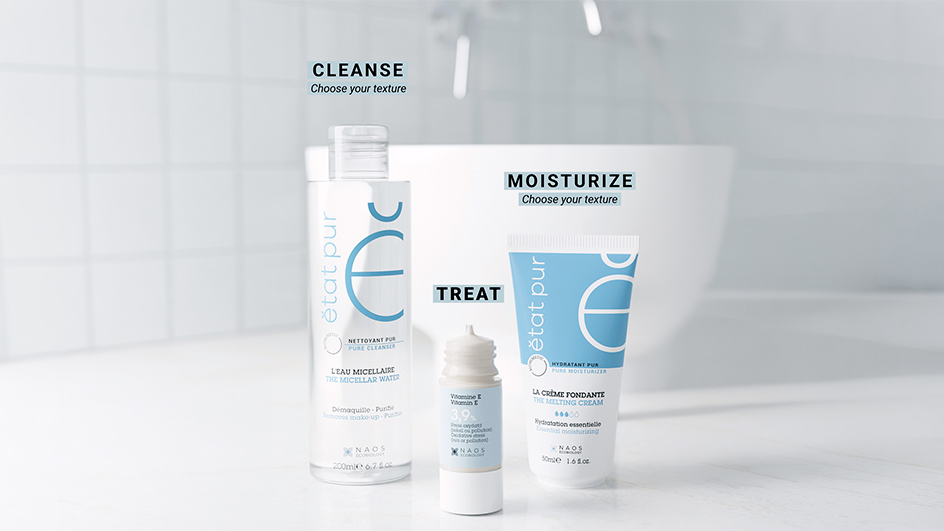
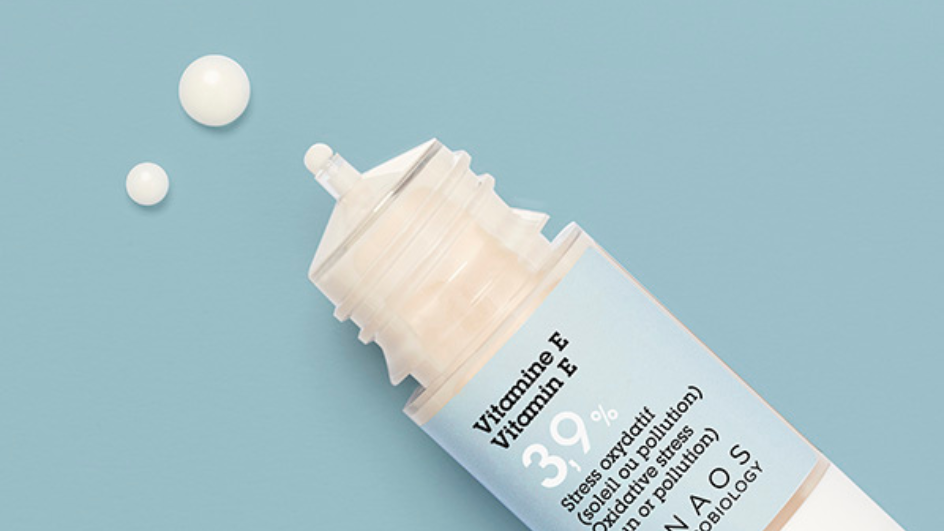
Vitamin E can be used daily as part of a skincare routine.
To optimise its benefits, it is recommended to apply it to clean skin before your moisturiser.
Regular use over several weeks helps to support skin exposed to daily oxidative stress.
Choose a vitamin E-rich active ingredient to help prevent skin ageing
Choosing the right active ingredients is particularly important when looking for a targeted response to your skin’s needs.
Vitamin E has been used in dermatology for more than 50 years for its antioxidant and photoprotective properties⁵.
To provide lasting support to the skin against oxidative stress, a course of at least 4 weeks is recommended.
Written by
The Etat Pur team
Our content is developed in collaboration with experts in skin biology and draws on international scientific publications in dermatology and cosmetology.
Etat Pur products are formulated according to Ecobiology, a scientific approach that consists in supporting the skin’s natural mechanisms rather than simply correcting visible signs or overtreating the skin. By favouring targeted action on the causes of skin imbalances, this approach helps to preserve the skin’s balance over the long term while respecting its natural ecosystem.
Scientific references
1 – Vitamin E Fact Sheet for Health Professionals
National Institutes of Health (NIH), Office of Dietary Supplements
https://ods.od.nih.gov/factsheets/VitaminE-HealthProfessional/
2 – Vitamin E
Linus Pauling Institute, Oregon State University
https://lpi.oregonstate.edu/mic/vitamins/vitamin-E
3 – Depletion of Human Stratum Corneum Vitamin E: An Early and Sensitive In Vivo Marker of UV Induced Photo-Oxidation
Thiele JJ, Traber MG, Packer L. Journal of Investigative Dermatology. 1998;110(5):756–761.
https://www.jidonline.org/article/S0022-202X(15)40076-4/fulltext
4 – Vitamin E in dermatology
Keen MA, Hassan I. Indian Dermatology Online Journal. 2016;7(4):311–315.
https://pmc.ncbi.nlm.nih.gov/articles/PMC4976416/
5 – Vitamin E in dermatology
Keen MA, Hassan I. Indian Dermatology Online Journal. 2016;7(4):311–315.
https://pmc.ncbi.nlm.nih.gov/articles/PMC4976416/
6 – Delivery of vitamin E to the skin by a novel liquid skin cleanser: comparison of topical versus oral supplementation
Journal of Cosmetic Science, via PubMed — Tavakkol A. et al., 2004
https://pubmed.ncbi.nlm.nih.gov/15131729/